

Experience Tokyo’s Festivals and Celebrations! A Cultural Adventure Plan by Street Kart
Stopped at a red light in my kart, a group of guys in traditional happi coats come charging past carrying a portable shrine on their shoulders. The low rumble of the engine mixes with their thundering chants — it’s one of those beautifully crazy moments you can only get in Tokyo. This city is where cutting-edge technology and centuries-old traditions coexist on the same street. And if you want to feel both of those worlds with your own senses, there’s no better plan than tearing through Tokyo’s streets in a street kart while soaking up the electric energy of local festivals.
The Insane Energy of Tokyo’s Festivals
I’ve been around Tokyo for a while, and the sheer density of festivals in this city still blows my mind. Spring brings cherry blossom festivals, summer delivers Bon Odori dances and fireworks shows, autumn has the Tori no Ichi fair, and winter lights up with illuminations and New Year shrine visits. No matter what time of year you show up, there’s a festival happening somewhere in the city.
What makes it really special is that Tokyo’s festivals aren’t some tourist show put on for the cameras. At Asakusa’s Sanja Matsuri, locals are out there for real — drenched in sweat, muscles straining as they carry massive shrines through the streets. At Kanda Matsuri, traditions stretching back to the Edo period are still very much alive, and you can feel the fierce pride of the parish members radiating off them. At Koenji’s Awa Odori, the dancers’ stomping feet literally shake the ground, and before you know it your own body starts moving to the rhythm. This kind of raw, authentic energy doesn’t come through in guidebook photos. You have to be there — hearing the sounds, feeling the crush of the crowd — to truly get it.
Another thing that makes Tokyo’s festival scene incredible is how different each area feels. Downtown shitamachi festivals are gritty and full of heart, while events in Shibuya and Roppongi are modern and international. The same city, the same word “festival,” but a completely different experience just by changing neighborhoods. That diversity is what makes Tokyo such a powerhouse of a city.
Blasting Through Tokyo’s Festival Zones in a Street Kart
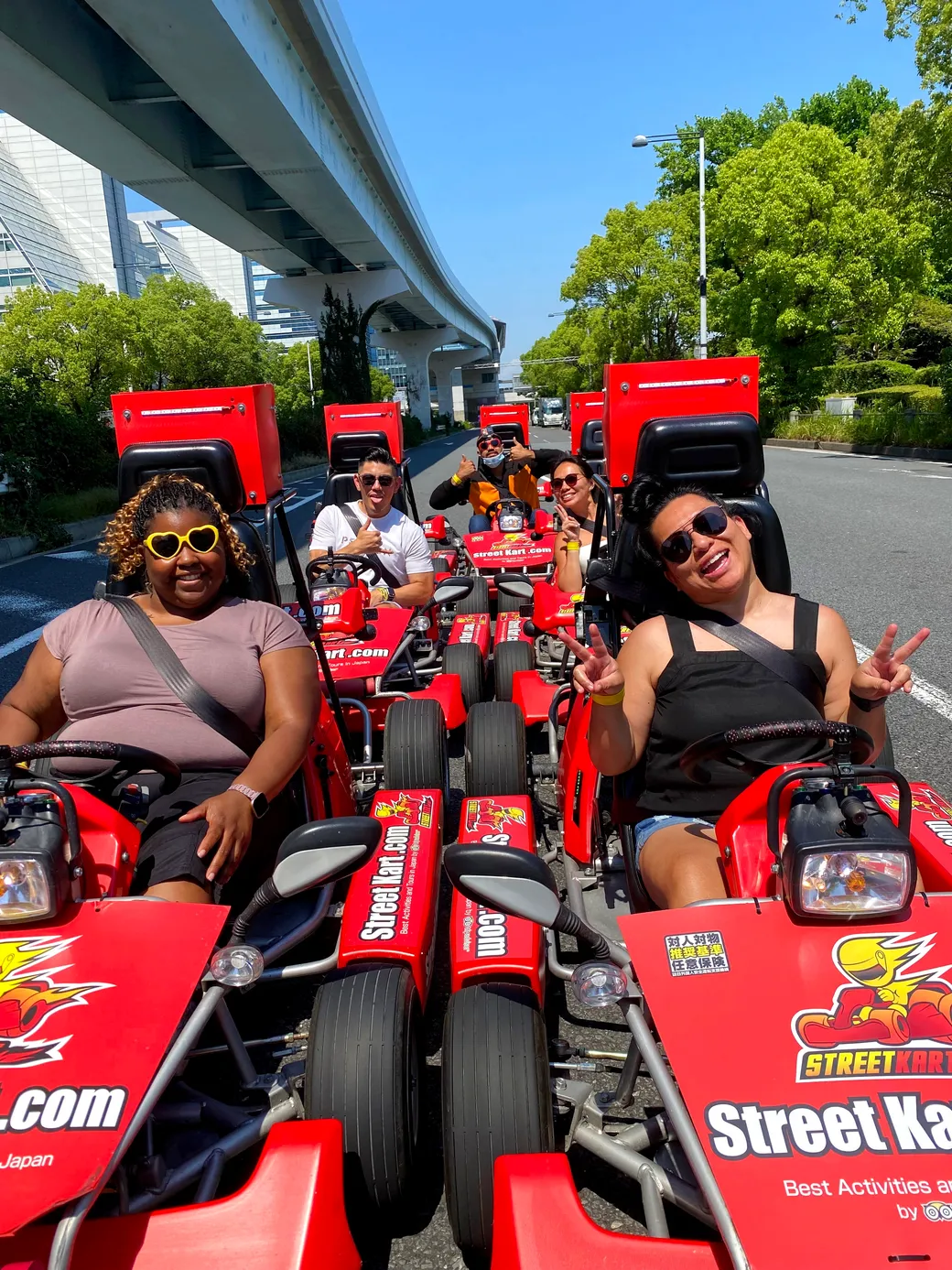
If you’re going to soak up the festival atmosphere, you might as well make the journey itself part of the adventure. That’s where street karts come in. A guide-led tour through Tokyo’s actual public roads in a street kart gives you a sense of connection to the city that buses and trains just can’t match. The rush of cutting through the wind with Tokyo Tower and Rainbow Bridge sliding past — it hits you with the same kind of adrenaline as catching a wave in Australia.
Tour routes are set by each shop location and designed to take you through Tokyo’s highlights efficiently. For example, a tour from the Akihabara area lets you cruise through the electric town’s blazing neon lights while catching glimpses of the majestic Kanda Myojin shrine — the famous stage for the Kanda Matsuri. Even if you’re not visiting during the festival, stopping by before or after your tour lets you feel the weight of history that permeates the shrine grounds.
Routes through the Asakusa area give you a low-angle view of Kaminarimon Gate and the bustling Nakamise shopping street. Asakusa is usually packed with tourists, but everything looks completely different from a kart seat looking up. Architectural details, lanterns tucked into side alleys, individual shop signs — they all jump right into your field of vision. If you’re timing your Tokyo trip around Sanja Matsuri, I’d highly recommend exploring Asakusa before or after your tour to catch the festival madness firsthand.
Here’s the key thing — kart tours are guide-led. You’re not free-roaming and pulling over wherever you want, but the flip side is zero chance of getting lost, with guides who know Tokyo’s traffic rules inside and out leading the way safely. You can focus on driving while still having the mental space to enjoy the scenery around you. Even if it’s your first time in Tokyo, you can jump into this activity with total confidence.
Tokyo’s Festival Calendar by Season
To get the most out of Tokyo’s festivals, timing is everything.
Spring in Tokyo means cherry blossoms and celebrations. From late March through April, cherry blossom festivals take over Ueno Park and the Meguro River area. Imagine riding a kart through drifting petals — just the thought of it gets the blood pumping. The cherry trees at Yasukuni Shrine are stunning too, and the cherry-lined Chidorigafuchi moat is breathtaking by both day and night.
Summer is when Tokyo’s festival energy peaks. The Sumida River Fireworks Festival in July is the ultimate summer event, drawing over 1.34 million spectators. In August, the Koenji Awa Odori floods the shopping streets with roughly 10,000 dancers. The Azabu-Juban Noryo Matsuri is another beloved summer festival with an amazing spread of street food stalls. Sure, summer in Tokyo is hot, but riding a kart with the wind in your face is surprisingly refreshing. An evening tour hits the sweet spot when the heat starts to ease up.
Autumn brings a rush of cultural events. The November Tori no Ichi fair at Asakusa’s Otori Shrine is legendary, with the grounds packed with stalls selling ornate kumade rakes for good fortune in business. When the ginkgo trees along Meiji Jingu Gaien turn golden, it’s an absolute dream for photography lovers. Cruising through Tokyo’s autumn-colored streets in a kart is an experience on another level.
Winter Tokyo sparkles with illuminations and New Year festivities. The zelkova trees on Omotesando lit up with lights, the Keyakizaka illumination in Roppongi, the corridor of light on Marunouchi Nakadori. Riding through these glittering scenes on a nighttime kart tour is something truly one-of-a-kind. Around New Year’s, you can also feel the energy of hatsumode crowds at Senso-ji and Meiji Shrine.
Tips for Combining Festivals with Kart Tours
If you want to hit both a festival and a kart experience in one day, think about your time management. Kart tours typically run about 1 to 2 hours. Hit the tour in the morning, then head to the festival grounds in the afternoon — that way you get both Tokyo’s active side and its traditional side in a single day. Or flip it: spend the day walking around the festival, then jump in a kart for an evening ride through Tokyo at night.
Book early. Festival seasons bring a flood of tourists to Tokyo, and popular time slots fill up fast. Check availability on kart.st and lock in your spot as soon as your travel schedule is set — that’s the smart move.
Why People Choose Street Kart
There are solid reasons why Street Kart keeps bringing people back for repeat visits.
First, the track record speaks for itself. Over 150,000 tours completed, more than 1.34 million customers served. An average rating of 4.9 out of 5 across over 20,000 reviews. Those numbers don’t say “pretty good” — they say “overwhelmingly loved.” When that many real customers are leaving that kind of feedback, it’s a genuine stamp of trust.
Then there’s the guide quality. Street Kart was the first kart operator in the industry to deploy guides specifically trained for international drivers. With guides who know Tokyo’s traffic inside and out leading the way, even someone driving on Japanese roads for the first time can relax and enjoy the ride. English communication support is a huge deal for overseas travelers too. Being able to enjoy a tour without any language barrier is more stress-free than you might imagine.
The shop network is impressive too. Six locations in Tokyo alone, plus shops in Osaka and Okinawa — eight bases total. With a fleet of over 250 karts, they can handle group bookings easily. Multiple Tokyo locations also means you can pick a departure point close to whatever festival you’re planning to attend. Heading to a festival in Asakusa? Use this shop. Exploring the Shibuya area? Go with that one. Being able to match your starting point to your itinerary is seriously convenient.
Safety is another area they don’t cut corners on. When you’re riding on public roads, safety management is everything. There’s a thorough briefing before departure and a careful rundown of traffic rules. Guides always ride at the front to lead the group, so there’s no risk of getting lost or ending up in a dangerous situation. As someone who’s done outdoor activities for years, I can say this level of safety management is the real deal.
And their website supports 22 languages — impressive. Tourists from all over the world can book in their own language, which is a thoughtful touch. The low barrier to booking means the moment you think “maybe I should try this,” you can act on it immediately.
If you’re wondering about driver’s license requirements, check out the kart.st driver’s license info page for details. An international driving permit generally gets you in, but requirements vary by country, so it’s worth checking ahead of time for peace of mind.
Tips to Deepen Your Tokyo Cultural Experience
To take a Tokyo trip built around festivals and kart adventures even further, don’t sleep on the food. Takoyaki, yakisoba, and candy apples from festival stalls are the taste of Japanese summer, full stop. Near festival venues, you’ll also find beloved local restaurants that have been around forever. Asakusa means tempura and soba, Kanda means legendary unagi joints, and Akihabara is ramen battleground territory. Stop by before or after your tour and go all in on Tokyo’s local food scene.
Another thing I’d recommend: pay attention to the sounds of the festivals. The boom of taiko drums, the melody of bamboo flutes, the rhythm of the chanting. Tokyo’s festivals have their own unique soundscape. Even when you’re riding in a kart, the sounds of the city pour into your ears. The hum of the engine blending with the city’s buzz, the distant sound of festival music practice drifting over during a red light — those accidental layers of sound create memories that can only happen in Tokyo.
If you’re into photography, keep an eye out for great shots during the kart tour. But here’s the deal — absolutely no phone use while driving. Save the shooting for passengers or for when you’re stopped before and after the tour. Photos taken from that low kart-level perspective have a completely different impact from regular tourist snapshots. Mount a GoPro or action camera and you can capture immersive video footage too.
For experience details and the latest course information, check out the Street Kart info page before your trip to make planning easier.
Two Kinds of “Wind” — Tokyo’s Festivals and Karts
Tokyo’s festivals carry a “wind” that’s been passed down for hundreds of years. The heat of the shrine carriers, the vibration of the drums, the glow of paper lanterns. And street karts bring their own kind of “wind” — the exhilarating rush of cutting through Tokyo’s streets. The fact that you can experience both of these “winds” in a single day is what makes Tokyo such an extraordinary city.
The Tokyo you see through a tour bus window and the Tokyo you feel from a kart seat are two completely different things. Breathing the same air as locals at a festival venue, then tearing through Tokyo’s streets at your own eye level in a kart — that kind of experience stays vivid in your memory long after you’ve gone home.
For your next Tokyo trip, check the festival schedule and pair it with a kart tour. Book at kart.st. Weekends and holidays fill up fast, so lock in your reservation as soon as your plans are set. Give yourself a day to feel Tokyo’s culture and wind with your whole body.
A Note on Costumes
Our shop does not offer rental costumes related to Nintendo or “Mario Kart.” We only provide costumes that respect intellectual property rights.
